Friday, September 25, 2026 / by Vic Markarian
Why So Many Sellers Are Cutting Their Prices Right Now

Why So Many Sellers Are Cutting Their Prices Right Now
If you've been watching the housing market lately, you've probably noticed something:
Price cuts are everywhere.
For sellers, that can be frustrating. Nobody wants to put their home on the market and then reduce the asking price a few weeks later.
For buyers, though, a price reduction can look like an opportunity, or a warning sign.
But with price cuts becoming increasingly common, a reduction doesn't necessarily mean there's something wrong with the house.
In many cases, it simply means the original asking price didn't line up with what today's buyers were willing to pay.
And the latest numbers show just how common that has become.
More Than 4 in 10 Listings Have Had a Price Cut
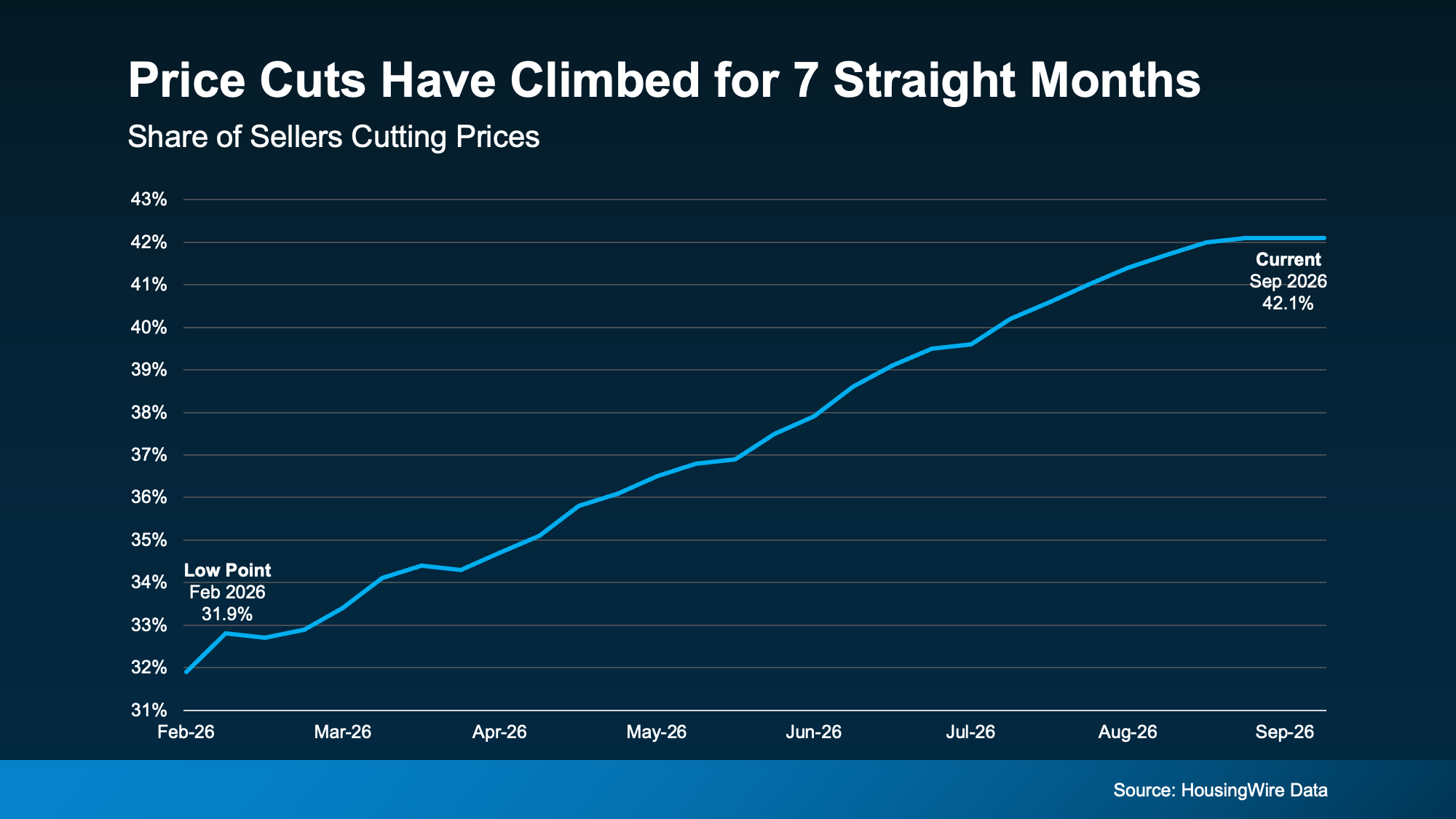
According to HousingWire Data, the share of sellers cutting their asking prices has increased for seven consecutive months.
As of September 2026, 42.1% of sellers have cut their price, up from 31.9% in February.
That's a pretty significant shift.
More than 4 out of every 10 active listings have had at least one price reduction.
The typical price cut is also substantial, with sellers reducing their original asking price by roughly $17,560.
So why are sellers adjusting their prices?
A big part of it comes down to affordability.
Mortgage rates remain elevated, buyers have more homes to choose from in many markets, and buyers don't have the same urgency to make an offer simply because a home has come on the market.
That puts more pressure on sellers to get the price right.
Buyers Have More Choices... and They're Using Them
This is where the broader market picture becomes important.
When buyers have limited choices, an overpriced home may still attract attention because there aren't many alternatives.
That's different from today's environment.
If a buyer doesn't think a home is worth the asking price, there may be another property down the street that better fits their budget.
That gives buyers more room to be selective.
And sellers are responding.
List Prices Have Come Down From Their Peak
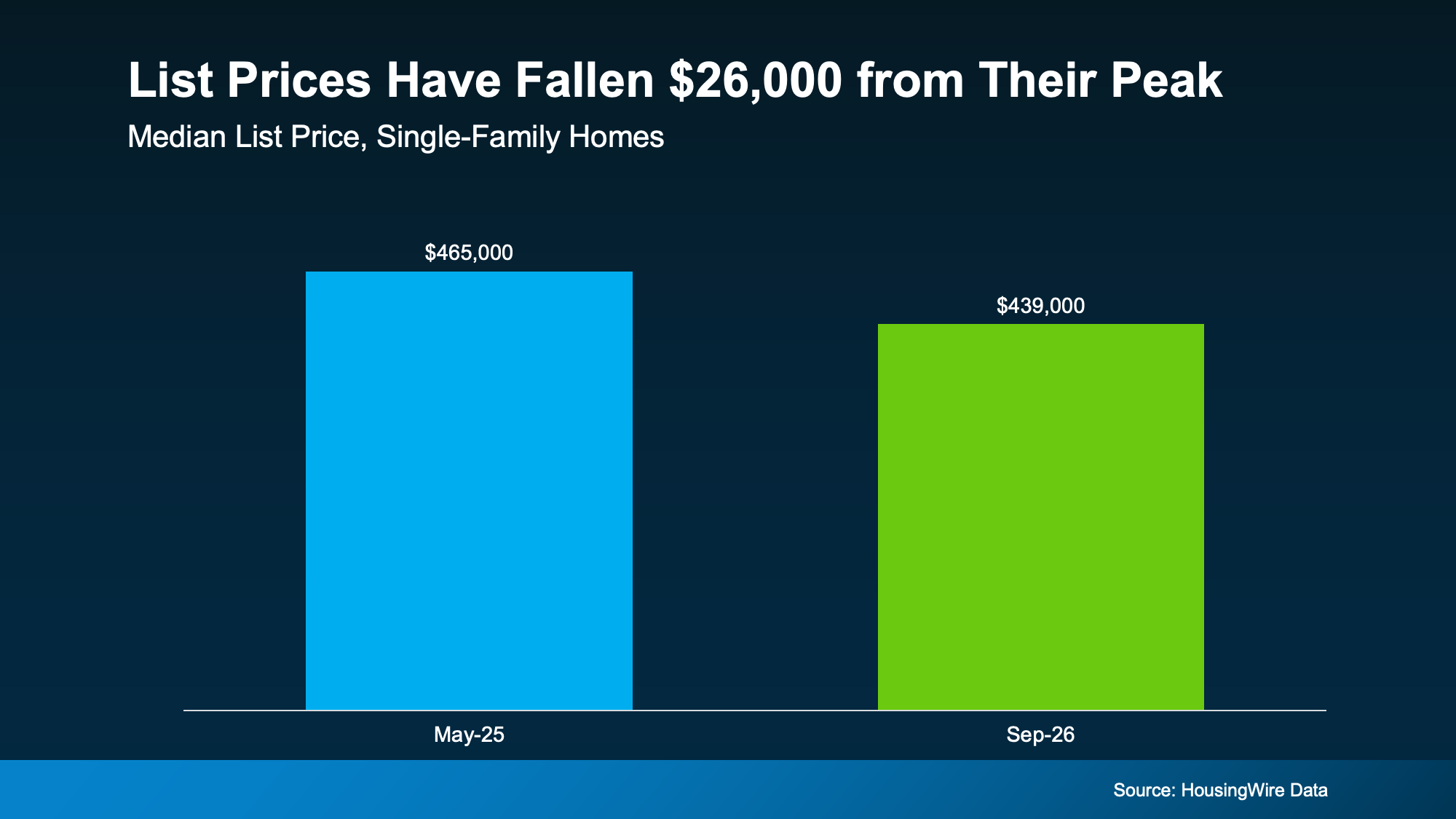
HousingWire Data also shows that median list prices for single-family homes have fallen from their 2025 peak.
The median list price was around $465,000 in May 2025. By September 2026, it had fallen to approximately $439,000; a $26,000 difference.
Some of that movement is seasonal. Asking prices typically soften as the market moves toward the slower fall and winter months.
But the broader trend is worth paying attention to.
Sellers are having to pay closer attention to what buyers are actually willing to pay today, rather than relying on what homes were selling for a year or two ago.
That's an important distinction.
A home isn't priced in a vacuum. It's competing with every other property a buyer can see.
Sellers Outnumber Buyers by a Wide Margin
There's another piece of the puzzle.
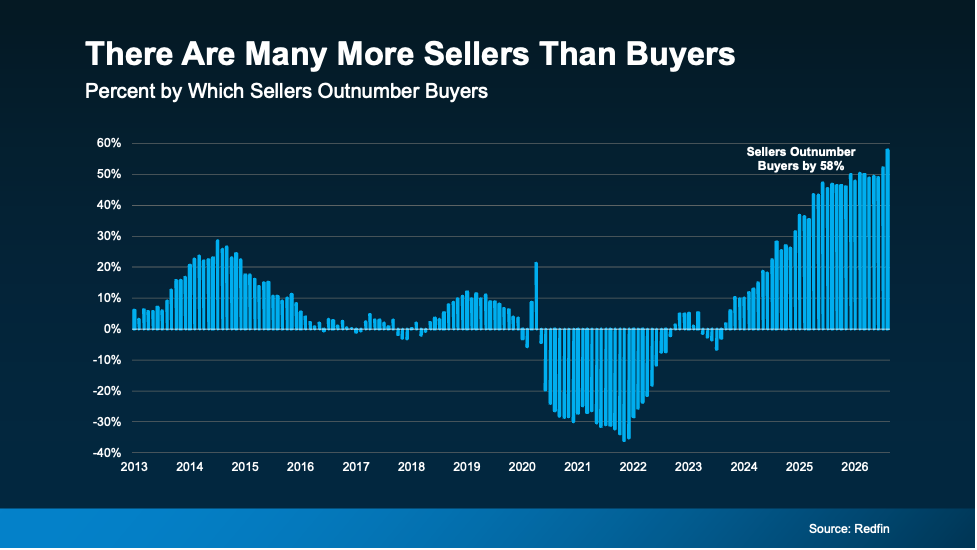
According to Redfin, sellers currently outnumber buyers by about 58%, the widest gap in the data shown below.
That changes the negotiating environment.
When there are more sellers competing for a smaller pool of buyers, pricing becomes even more important.
A buyer can simply move on if another home offers better value.
That doesn't mean every seller needs to slash their price.
It means the market is giving buyers more choices, and sellers have to compete for attention.
What Does This Mean If You're Selling?
The biggest takeaway isn't that you should automatically price your home below market value.
It's that your initial pricing strategy matters more than ever.
An overpriced home can sit while buyers watch other properties sell.
And the longer a listing sits, the harder it can become to create that initial sense of urgency.
Sometimes the right move is a price adjustment.
Sometimes it's improving the presentation, addressing condition issues, changing the marketing strategy, or simply giving buyers a reason to choose your home over the competition.
The important thing is recognizing the problem early rather than waiting several months and making a much larger adjustment later.
What Does This Mean If You're Buying?
More price reductions don't mean every home is suddenly a bargain.
But they can create opportunities that weren't as common when inventory was tighter.
If a home has been sitting on the market and has already had a price reduction, it may be worth looking more closely at the seller's situation.
Depending on the property and circumstances, buyers may have room to negotiate on more than just the purchase price.
That could include:
- Closing costs
- Repairs or credits
- Financing concessions
- A flexible closing date
- Other terms that matter to the buyer
But negotiation should still be based on the individual property and comparable sales, not simply the fact that the listing has a price cut.
The Real Story Behind All These Price Cuts
It's easy to look at the numbers and conclude that sellers are losing control of the market.
That's not really the full story.
What's happening is more straightforward:
Buyers have more choices, affordability is still challenging, and sellers are adjusting to where the market is today.
That's a very different market from one where almost every listing attracts multiple offers immediately.
And it's why pricing correctly from the beginning has become so important.
Bottom Line
Price cuts are becoming a normal part of today's housing market.
For sellers, they're a reminder that pricing has to reflect today's buyers, not yesterday's market.
For buyers, they're a sign that it may be worth looking beyond the list price and paying attention to how long a home has been on the market, whether the price has changed, and how it compares with the competition.
The national numbers tell us what's happening broadly.
Your local market tells you what it means for your home.
Before you decide whether to buy or sell, look at the actual numbers in your neighborhood, not just the headlines.